How to Stay Consistent Online and Run Meta Ads that Convert
2026-04-03
How Sales and Marketing Alignment Drives Revenue Growth
2026-05-28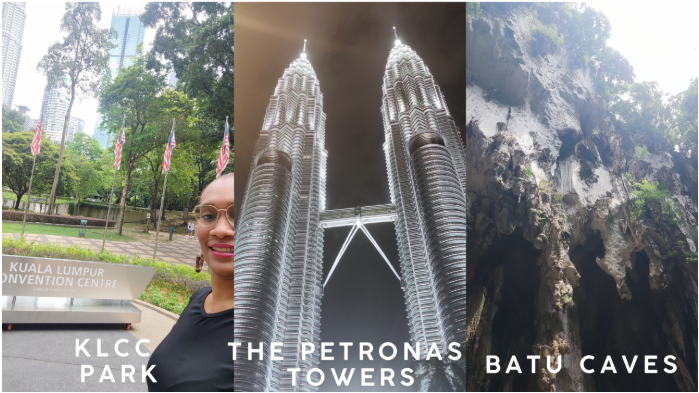
I recently returned from an eight-day trip to Kuala Lumpur with my son, and while it was a wonderful opportunity to explore a city that has been on my radar for years, the experience left me reflecting on something much deeper than travel. Between visiting landmarks, walking through busy streets and experiencing the incredible energy of the city, I found myself thinking about how differently work and life can be structured. The trip quietly reinforced a realization that has been forming for some time now, that many Caribbean professionals may need to rethink our traditional ideas about what success, balance and professional life are supposed to look like.
One of the things that struck me during the trip was that it didn’t resemble what we traditionally think of as a vacation. For many of us in the Caribbean, a vacation usually means taking a week or two off work, disconnecting from emails and responsibilities, and stepping away from professional commitments entirely. This trip was different. While we explored the city and enjoyed time together, I also conducted an online class from the dining area of the hotel, responded to emails, and took a few business calls along the way.
Interestingly, none of that felt overwhelming. In fact, it felt quite natural. Since moving to Vietnam about six months ago, I have mentioned in several posts that I no longer feel as stressed or constantly caught on the hamster wheel of work. My schedule is more intentional, my pace has slowed down, and yet the work continues to flow. Kuala Lumpur simply reinforced a realisation that had been quietly forming in the background: perhaps work and life do not always have to exist as two completely separate worlds.
Comedian and author Trevor Noah once made an interesting observation about this idea. See the video here. He noted that we often try to draw very firm boundaries between work and life, when in reality work is already a significant part of life. Instead of constantly trying to divide the two, perhaps the more realistic approach is to allow them to flow together more naturally. That perspective resonated deeply with me during the trip. In many ways, the experience reflected what people now refer to as the digital nomad lifestyle, where work, travel and personal life intersect rather than compete.
For Caribbean professionals, however, the digital nomad concept can sometimes feel distant or unrealistic. It is often portrayed as something reserved for tech workers, freelancers in Europe or influencers who appear to live permanently on airplanes and beaches. Yet the truth is that many Caribbean professionals already possess the kinds of skills that translate well across borders. We are adaptable, relationship-oriented and culturally agile. Many of us already work with international partners, clients or institutions. What often needs to change is not our capability, but our thinking about how work can be structured.
There are certainly meaningful advantages to designing a more location-independent professional life. Flexibility is one of the most obvious benefits. Instead of being tied to a rigid schedule or physical office, work can be structured around a broader lifestyle that includes travel, family time and personal development. Exposure to global opportunities is another major advantage. Since relocating to Vietnam, I have had the opportunity to teach, mentor and collaborate with individuals across several countries, including Vietnam, Singapore, Malaysia and the Philippines. Many of these opportunities emerged through relationships built over time, both online and offline.
The lifestyle also allows professionals to design their lives in ways that feel more aligned with their personal priorities. Rather than waiting until retirement to explore the world or experience different cultures, it becomes possible to integrate those experiences into one’s working life.
At the same time, it would be unrealistic to present the digital nomad path as entirely effortless. It requires careful planning and a level of discipline that many people underestimate. Income stability can be one of the biggest challenges, particularly for professionals who rely on project-based work or consulting. This is why building multiple income streams becomes essential. In my own case, my work currently includes online teaching, workshops, consulting and coaching, and there are still several digital product opportunities that I have not fully explored. Diversifying income helps create a buffer that allows greater flexibility in how and where one works.
Another critical component is learning how to digitise your expertise. Many professionals underestimate how transferable their skills actually are. Teaching, consulting, coaching, research, training and creative services can often be delivered online in ways that open up global markets. The challenge is not necessarily the skill itself, but the willingness to repackage it for digital delivery.
Networking also becomes even more important in a location-independent career. Many of the opportunities I have experienced over the past year have been the direct result of relationships built over time. Those relationships were cultivated through conferences, teaching engagements, professional collaborations and consistent visibility online. For professionals exploring global opportunities, networks often become the bridge between local expertise and international engagement.
Over the years, I have also found that planning work in structured cycles can reduce much of the uncertainty that comes with independent work. I tend to plan my business activities in ninety-day blocks, which allows me to secure projects in advance and maintain a clearer view of the months ahead. At the moment, several projects are already carrying me through to June 2026, with another contract running until December 2026. This type of planning provides a sense of stability while still allowing the flexibility that makes this lifestyle possible.
Ultimately, the most important realisation from my time in Kuala Lumpur had less to do with travel and more to do with perspective. Life rarely unfolds in a straight line. Instead, it moves through seasons. Some seasons are focused on building careers, establishing stability and creating foundations. Other seasons may invite exploration, reinvention or a different pace of life.
For Caribbean professionals especially, embracing these changing seasons may require us to challenge long-held assumptions about success. Success does not always have to mean remaining in one location for decades, following a single career path, or postponing life experiences until retirement. Sometimes success simply means recognising when a different approach to life and work might serve you better in the present moment.
For me, this particular season includes living in Vietnam, teaching and mentoring across borders, traveling with my son and discovering new ways of balancing work with life. It has required adjustments and learning, but it has also opened doors to possibilities I may not have considered years ago.
And perhaps that is the most important takeaway. The digital nomad lifestyle is not about escaping work or abandoning responsibility. It is about thoughtfully redesigning how work fits into your life. For some people, that may mean remaining exactly where they are. For others, it may involve exploring new environments, new markets and new rhythms of living.
Life happens in seasons, and sometimes the most important decision we can make is choosing the path that aligns with what is best for us in this particular moment.
Frequently Asked Questions
What is the digital nomad lifestyle for professionals?
The digital nomad lifestyle allows professionals to work remotely while living in different locations. Instead of being tied to an office, work is done online, often across multiple countries. This approach blends work, travel, and personal life into a more flexible structure.
Can Caribbean professionals become digital nomads?
Yes, many Caribbean professionals already have globally transferable skills such as consulting, teaching, and leadership. The key is restructuring how these services are delivered—primarily through digital platforms. With the right systems, location independence becomes achievable.
What are the benefits of a location-independent career?
A location-independent career offers flexibility, global opportunities, and improved work-life integration. Professionals can design schedules around personal priorities while accessing international clients and markets. It also allows continuous personal and cultural growth.
How do you create multiple income streams as a digital nomad?
You can diversify income through consulting, online teaching, digital products, coaching, and workshops. Combining active and semi-passive income streams helps create financial stability. This reduces reliance on a single source of income.
What challenges do digital nomads face?
Common challenges include income instability, time zone differences, and maintaining consistent workflows. It also requires strong discipline and planning. Building systems and predictable income streams can help manage these challenges.
How can professionals digitize their expertise?
Professionals can turn their skills into online services such as courses, coaching programs, or consulting packages. This involves repackaging knowledge into digital formats that can be delivered remotely. Platforms and tools make global delivery accessible.
Is the digital nomad lifestyle sustainable long-term?
Yes, with proper planning and structured income streams, it can be sustainable. Many professionals maintain stability by planning projects in advance and working in cycles. Sustainability depends on strategy, not just mobility.
How important is networking for digital nomads?
Networking is critical because many opportunities come from relationships. Building connections through online platforms, events, and collaborations helps professionals access global work. Strong networks often lead to consistent opportunities.
Warning: Trying to access array offset on value of type null in /home/debbiejo/public_html/wp-content/themes/betheme/includes/content-single.php on line 286