Why Every Business Needs a Professional Website
2026-06-19
Personal Branding Tips for Entrepreneurs and Leaders
2026-07-10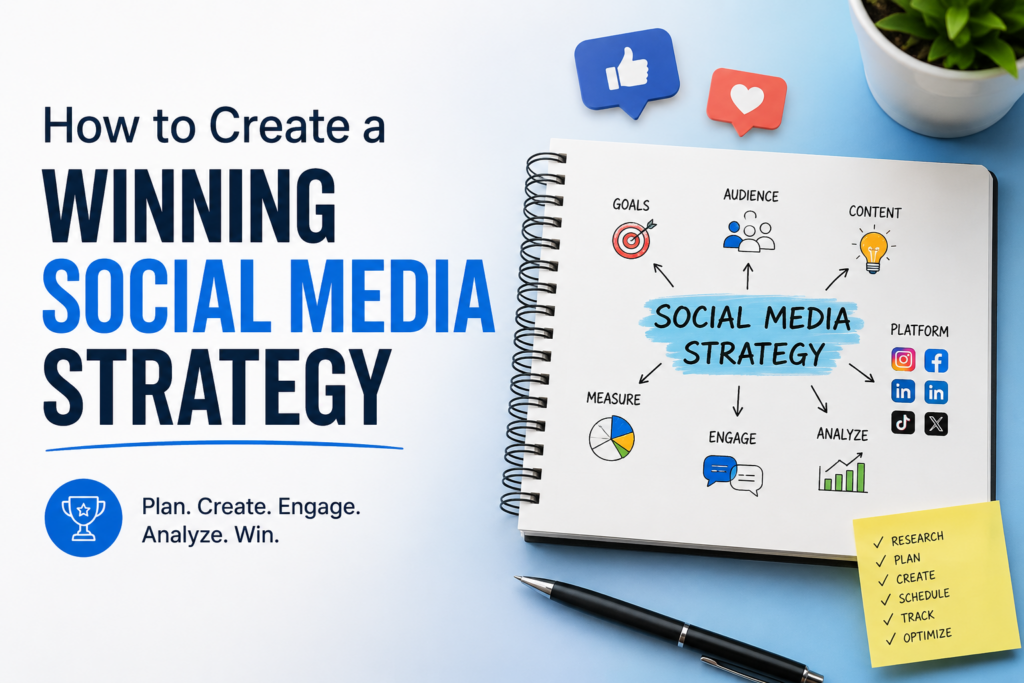
How to Create a Winning Social Media Strategy
When the pandemic hit, my business had to evolve quickly.
Before COVID-19, much of my company’s work focused on training and development. But as businesses across the Caribbean shifted online, I found myself moving deeper into social media management, content marketing, and helping professionals and entrepreneurs launch and grow their LinkedIn presence.
What started as a response to a crisis eventually became a major part of my business.
Over the years, I’ve worked with companies, entrepreneurs, executives, and educators across the Caribbean, and one issue continues to stand out:
Most entrepreneurs struggle with consistency, because social media can feel overwhelming when you’re running a business.
Some business owners are unsure what type of content to create. Others are unclear about their positioning or who exactly they are trying to attract. Some post but never engage with their audience. And many people simply stop posting altogether when life or business gets busy.
But if there’s one thing that has helped me grow my own platforms, particularly LinkedIn to over 35,000 followers, it has been consistency.
Not perfection. Not going viral. Consistency.
And the truth is, consistency becomes much easier when you have a strategy.
A winning social media strategy is not about randomly posting every day. It’s about creating systems that make visibility manageable and sustainable.
One of the biggest things that helped me was repurposing content. Entrepreneurs often believe they need to create something brand new every single day, but that is one of the fastest ways to burn out. One idea can become a LinkedIn post, a short video, a blog article, an email topic, or even several smaller pieces of content. Repurposing allows you to stay visible without constantly reinventing the wheel.
Batching content also changed the game for me. Instead of waking up every day wondering what to post, I began dedicating time to creating multiple pieces of content at once. This gave me structure and reduced the stress of trying to “be creative” daily while juggling consulting, teaching, and client work.
Scheduling content was another major shift. Social media should support your business, not consume your entire life. By scheduling posts in advance, I was able to maintain visibility even while travelling, teaching internationally, or working with clients across different time zones.
But beyond consistency, entrepreneurs also need clarity.
Your audience should quickly understand:
• Who you are
• What you do
• Who you help
• Why they should trust you
Too many businesses are posting content without clear positioning. Visibility without positioning creates confusion, and confused audiences rarely convert into customers.
Another major issue I see is the lack of engagement. Social media was never meant to be a one-way broadcast channel. Some entrepreneurs post content and disappear. But relationships are what drive opportunities online. Replying to comments, engaging with other people’s content, networking intentionally, and building conversations are all part of a strong social media strategy.
A winning social media strategy is not about trying to be everywhere or copying every trend.
It’s about creating a repeatable system that allows you to consistently show up, communicate your value clearly, and build relationships with the right audience over time.
And perhaps most importantly, understanding that social media success rarely happens overnight.
The entrepreneurs and professionals who are winning online are usually the ones who kept showing up long after others stopped.
If you’re building your brand or business online, focus less on chasing virality and more on building consistency, clarity, and connection.
That’s where real long-term growth happens.
Frequently Asked Questions
What is a social media strategy, and why is it important for business growth?
A social media strategy is a structured plan that outlines how a business will use social media platforms to achieve specific marketing and business objectives. A well-defined social media strategy helps organizations increase brand awareness, engage target audiences, generate leads, and measure the effectiveness of their digital marketing efforts.
How do you measure the success of a social media strategy?
The success of a social media strategy is measured using key performance indicators (KPIs) such as engagement rate, reach, impressions, website traffic, lead generation, conversions, and return on investment (ROI). Tracking social media analytics helps businesses understand what content resonates with their audience and where improvements are needed.
Which social media platforms should businesses focus on?
The right platforms depend on the target audience, industry, and business objectives. LinkedIn is often effective for B2B marketing, while Facebook, Instagram, TikTok, and YouTube can be valuable for consumer-focused brands. A successful social media marketing strategy prioritizes platforms where the intended audience is most active.
How often should a business update its social media strategy?
Businesses should review their social media strategy at least quarterly and make adjustments based on performance data, audience behavior, and industry trends. Regular evaluation ensures the strategy remains aligned with changing business goals and platform updates.
What role does audience targeting play in a social media strategy?
Audience targeting is essential because it ensures content reaches the people most likely to engage with a brand and take action. Effective targeting uses demographic, behavioral, and interest-based data to create more relevant content and improve campaign performance.
How can businesses improve social media engagement?
Businesses can increase social media engagement by creating valuable content, encouraging conversations, responding to comments, and maintaining consistent posting schedules. Interactive formats such as polls, videos, live streams, and user-generated content can also strengthen audience participation and brand loyalty.
What are the most common mistakes in social media planning?
Common mistakes include posting without clear objectives, ignoring audience insights, focusing solely on promotional content, and failing to track performance metrics. Effective social media planning requires a balance between brand promotion, audience value, and data-driven decision-making.
How does a social media content strategy support long-term marketing goals?
A social media content strategy ensures content is aligned with business objectives, audience needs, and brand messaging. By consistently delivering relevant and valuable content, businesses can build trust, establish authority, and create sustainable growth through stronger customer relationships.
Warning: Trying to access array offset on value of type null in /home/debbiejo/public_html/wp-content/themes/betheme/includes/content-single.php on line 286