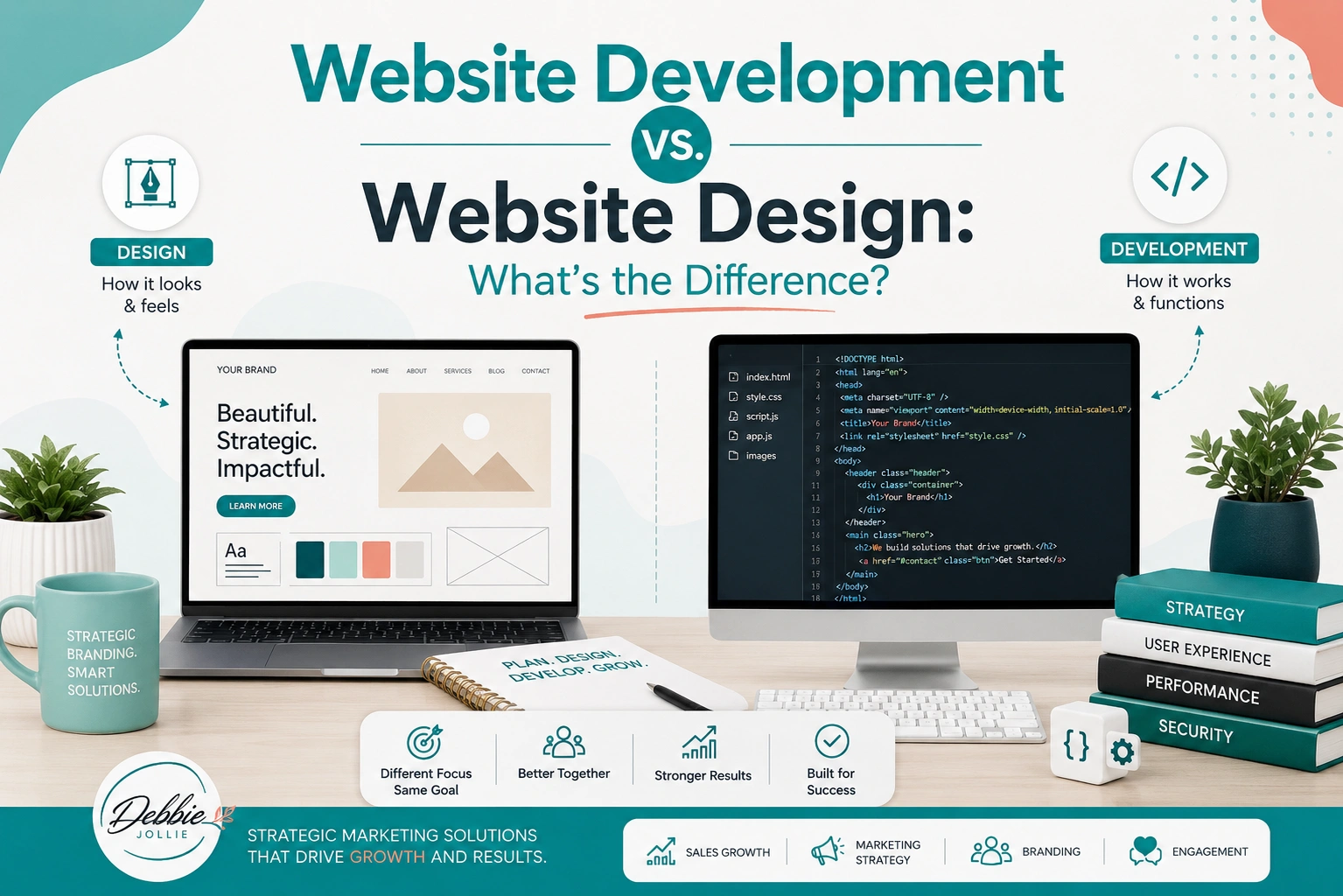
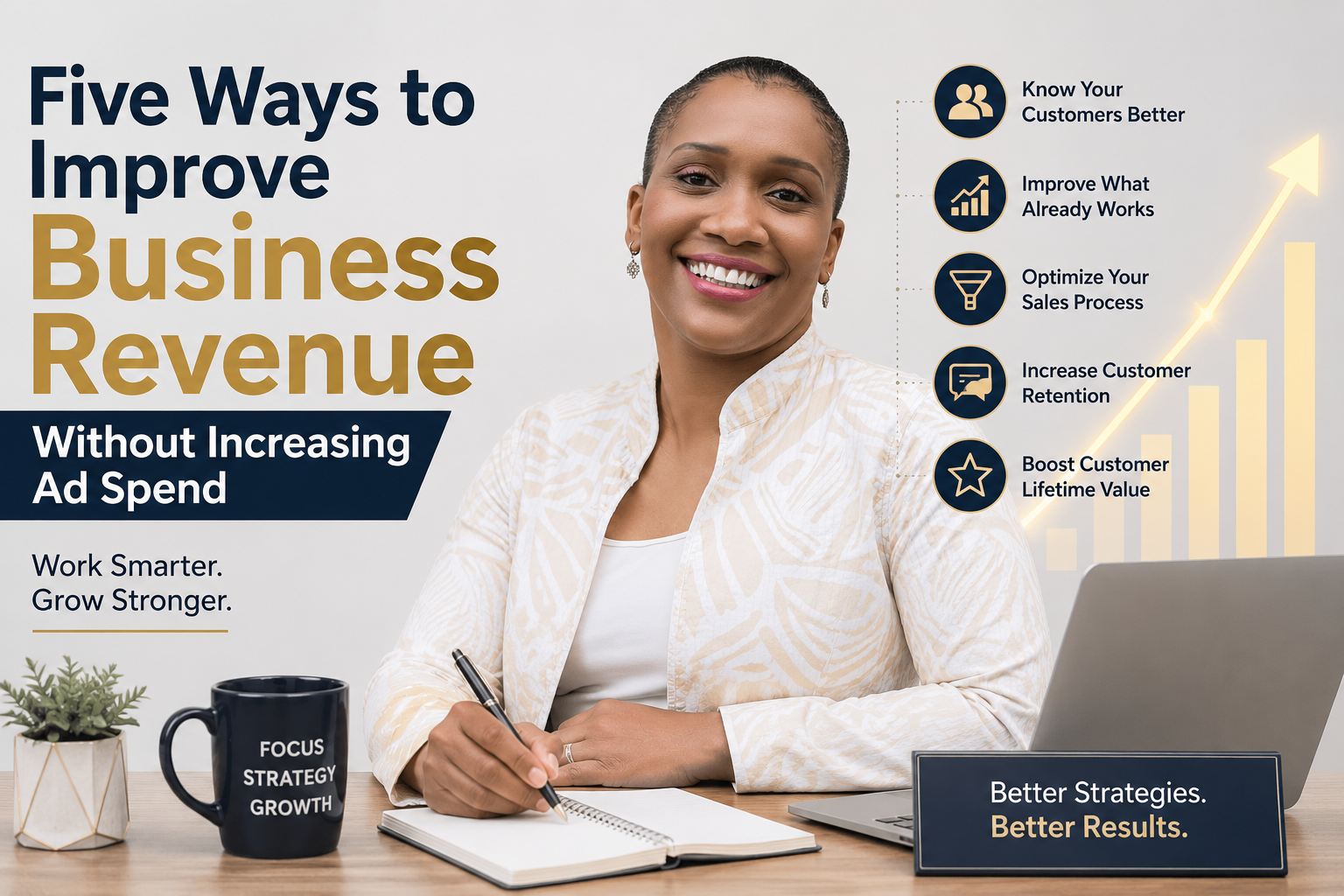
Five Ways to Improve Business Revenue Without Increasing Ad Spend
2026-07-22
Website Development vs. Website Design: What’s the Difference?
2026-07-29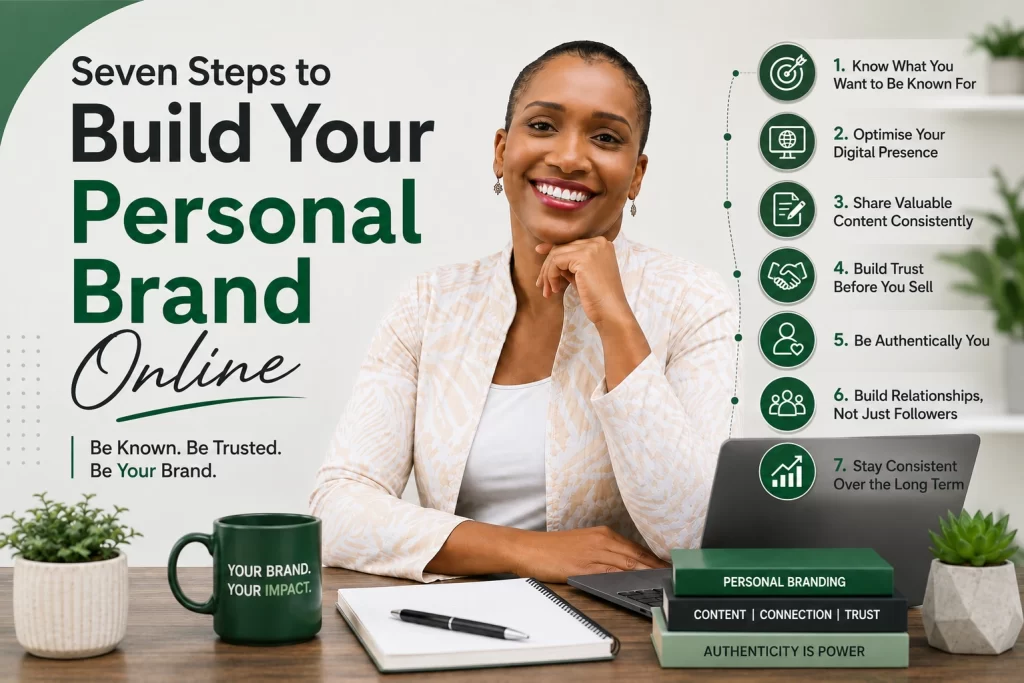
Seven Steps to Build Your Personal Brand Online
There is something I often laugh about when I think back to 2016.
At the time, I wasn’t trying to become a personal branding consultant. I wasn’t trying to become a thought leader. I wasn’t trying to build an international audience.
I was simply writing.
Creating content.
I had started publishing articles on LinkedIn about resume writing, career development, marketing, leadership, communication, entrepreneurship, and the lessons I was learning throughout my career. Every now and then, someone would send me a message saying that the blog helped them or inspired them to create content online.
So it was important for me to master this and do more of it. I ordered the Kindle version of Austin Kleon’s book about getting discovered and it allowed me to add a few more tools to my arsenal.
What I didn’t realise then was that I was quietly building my personal brand.
Fast forward to 2026, and I now live and travel Asia after leaving my home country of Trinidad and Tobago in late 2025. One of the most fascinating things I’ve experienced since moving is how often people search for you before they ever speak to you.
Whether I attend a networking event in Da Nang, connect with someone on LinkedIn, or meet a potential client through a referral, the process is almost always the same.
Someone Googles my name or Chat GPTs it.
They visit my LinkedIn profile.
They look through my website.
They browse my social media.
They read some of my articles.
Within minutes, they’ve already formed an opinion about who I am, what I stand for, and whether they believe I can help them.
That’s the reality we live in today.
Your personal brand exists whether you intentionally build it or not. The only question is whether you’re controlling the narrative.
According to LinkedIn, professionals with complete profiles receive significantly more profile views and connection opportunities than those with incomplete profiles. Research from Edelman’s Trust Barometer has also consistently shown that people are more likely to trust experts who share knowledge and demonstrate credibility than organisations speaking through corporate marketing alone. Add to that the fact that over 90% of employers and many prospective clients search online before making decisions, and it’s clear that your digital presence is no longer optional, it’s expected.
Over the past decade, my personal brand has opened doors to international teaching opportunities, consulting projects, speaking engagements, media interviews, collaborations, and clients from countries I have never even visited.
None of that happened overnight.
It happened because I consistently invested in building a brand that reflected who I genuinely am.
Here are the seven steps I believe every professional should take.
Step 1: Know What You Want to Be Known For
This sounds simple, but it is where most people struggle.
Many professionals try to be everything to everyone. As a result, nobody really knows what they stand for.
Before you post another piece of content, ask yourself:
- What problems do I solve?
- Who do I want to help?
- What topics do I want people to associate with my name?
- What do I want someone to remember after visiting my profile?
When someone mentions Debbie Jollie, I want them to think about personal branding, strategic marketing, LinkedIn, communication, entrepreneurship, and helping professionals build confidence and visibility. LOL. It’s a mouthful but it still falls broadly under marketing and communications.
That clarity guides every piece of content I create.
Your brand should have the same level of focus.
Recommended resource: If you are struggling to determine what you want to be known for, KNOWN by Mark W. Schaefer provides a practical framework for identifying your area of authority, building your reputation and becoming recognised within your field. [View it on Amazon.]
Step 2: Optimise Your Digital Presence
Imagine meeting someone at a networking event.
You have a fantastic conversation.
They leave impressed.
An hour later they Google you.
What happens?
Do they find an outdated LinkedIn profile?
Old photos?
A website that hasn’t been updated in years?
Or do they find a professional digital presence that reinforces everything you said during your conversation?
Your online platforms should tell one consistent story.
That includes:
- A professional headshot
- A compelling LinkedIn headline
- A clear About section
- Updated experience
- Relevant achievements
- Recommendations
- A professional website
- Consistent branding across your social media
People often say first impressions matter.
Today, your digital footprint is often your first impression.
Recommended tool: A professional online presence begins with clear, well-lit photos and videos. The Weilisi Ring Light with Tripod and Phone Holder can help you create polished headshots, LinkedIn videos and social media content using your smartphone. It is a practical, affordable investment for strengthening your personal brand online. [View it on Amazon.]
Step 3: Share Valuable Content Consistently
This is probably the biggest lesson I learned over the last ten years. Consistency beats perfection.When I first started writing, my articles weren’t perfect. Some performed well.
Others barely received any engagement.But every article became another digital asset that people could discover months or even years later.Your content is evidence of your expertise. It allows people to experience your knowledge before they ever hire you.
You don’t need to publish every day. You do need to show up consistently. Share your experiences. Teach what you’ve learned. Offer practical advice. Tell stories.
Celebrate wins.
Discuss challenges.
Give people a reason to remember you.
The professionals who become recognised experts are rarely the ones who know the most.
They’re usually the ones who share what they know most consistently.
Recommended resource: If you struggle to share your expertise consistently, Show Your Work! by Austin Kleon offers practical guidance on sharing your ideas, experiences and creative process with your audience. It is a useful resource for professionals who want to become more visible, demonstrate their expertise and build an audience without feeling overly promotional. [View it on Amazon.]
Step 4: Build Trust Before You Sell
One of the biggest mistakes I see online is treating every post like an advertisement. People don’t log onto LinkedIn hoping to be sold to. They want to learn.
They want inspiration.
They want solutions.
Trust is built long before a contract is signed.
Every helpful article, educational video, podcast interview, webinar, workshop, or thoughtful comment builds credibility.
By the time someone contacts you, they should already feel like they know you.
Many of my consulting clients tell me they had been following my content for months, sometimes years, before they finally reached out.
That isn’t luck.
That’s the power of trust.
Recommended resource: Building trust begins with creating genuine value for others. The Go-Giver by Bob Burg and John David Mann demonstrates how generosity, authenticity and a focus on serving others can lead to stronger professional relationships and long-term business success. It is a helpful resource for anyone who wants to build credibility before making the sale. [View it on Amazon.]
Step 5: Be Authentically You
One of the reasons I believe my brand resonates with people is because I don’t pretend my journey has been perfect. I openly talk about my stammer.I talk about career setbacks.I talk about toxic workplaces. I talk about moving across the world. I talk about building a business from scratch.
I share both successes and failures.
People don’t connect with perfection.
They connect with authenticity.
That doesn’t mean sharing every detail of your private life.
It means allowing people to see the human being behind the professional title.
Your story is one of your greatest competitive advantages because nobody else has lived it.
Recommended resource: Authenticity requires the courage to be seen as you truly are.Daring Greatly by Brene Brown explores how vulnerability, courage and openness can help you build more meaningful relationships and connect genuinely with others. It is a valuable resource for anyone who wants to create a personal brand that feels both credible and human. [View it on Amazon.]
Step 6: Build Relationships, Not Just Followers
A large audience is wonderful.
A trusted network is even more valuable.
Some of my biggest opportunities have not come from viral posts.
They came from conversations.
From referrals.
From people introducing me to someone else.
From engaging thoughtfully with other professionals online.
Personal branding isn’t simply about broadcasting your message.
It’s about creating meaningful relationships.
Comment on other people’s posts.
Celebrate their achievements.
Introduce people within your network.
Offer help without immediately expecting something in return.
Relationships built on generosity tend to create opportunities that algorithms never can.
Recommended resource: A strong personal brand is built through genuine relationships, not simply a large number of followers.Never Eat Alone by Keith Ferrazzi offers practical guidance on building and maintaining a valuable professional network through generosity, consistent communication and meaningful connections. It is an excellent resource for anyone who wants to turn online connections into lasting professional relationships and opportunities. [View it on Amazon.]
Step 7: Stay Consistent Over the Long Term
Perhaps the biggest misconception about personal branding is that it’s a quick project.
It isn’t.
It’s a long-term investment.
The article you write today may generate business two years from now.
The LinkedIn connection you make this month could become a client next year.
The podcast interview you record today could lead to an international speaking invitation.
Personal branding works through consistency and compounding.
Every article.
Every presentation.
Every recommendation.
Every testimonial.
Every workshop.
Every interview.
Every comment.
Each one adds another layer to your reputation.
Over time, those layers become something incredibly powerful.
People begin introducing you as the expert before you’ve even entered the room.
Recommended resource: Building a strong personal brand requires consistent action over time.Atomic Habits by James Clear offers practical strategies for developing small, repeatable habits that produce meaningful long-term results. It is a valuable resource for anyone who wants to remain consistent with creating content, nurturing relationships and strengthening their professional reputation. [View it on Amazon.]
Your Personal Brand Is Your Professional Reputation
Whether you’re an employee, entrepreneur, consultant, lecturer, executive, or freelancer, your personal brand is one of the most valuable professional assets you’ll ever build.
The world has changed dramatically over the last decade.
Opportunities are no longer limited by geography.
Today, someone in Singapore, South Africa, the United Kingdom, Canada, or the United States can discover your expertise with a single search.
But they can only discover what you’ve chosen to make visible.
That is why I encourage every professional I coach to stop thinking of personal branding as self-promotion.
Instead, think of it as reputation management.
It’s about making it easier for the right people to find you, trust you, and understand the value you bring.
Looking back, I never imagined those first LinkedIn articles I wrote around 2016 would eventually become the foundation of an international career.
Yet here I am, living in Vietnam, working with clients across different countries, teaching internationally, speaking, consulting, and continuing to build a career that isn’t confined to one employer or one location.
If I could leave you with one piece of advice, it would be this:
Don’t wait until you need opportunities to start building your personal brand.
Build it before you need it.
Because when the right opportunity appears, your personal brand should already be working for you, even while you’re asleep.
About Debbie Jollie
Debbie Jollie is an international marketing strategist, personal branding consultant, lecturer, and corporate trainer with nearly two decades of experience in higher education and strategic marketing. She helps professionals, executives, entrepreneurs, and organisations build credible personal brands, strengthen their LinkedIn presence, communicate with confidence, and position themselves for career and business growth in an increasingly digital world.
Frequently Asked Questions
When should you hire a personal branding consultant?
A personal branding consultant can help when you want to establish authority, reposition your professional image, or increase visibility within your industry. They develop a tailored personal brand strategy that aligns your expertise, messaging, and online presence with your business and career goals.
How does a personal branding consultant create an effective personal brand strategy?
A personal branding consultant begins by identifying your unique strengths, target audience, and professional objectives. They then develop a personal brand strategy that includes messaging, content planning, visual identity, and platform optimization to build credibility and long-term brand recognition.
What is the difference between personal branding and executive branding?
Personal branding focuses on building the reputation and visibility of an individual, while executive branding specifically positions business leaders as trusted authorities within their industries. Executive branding often emphasizes leadership, strategic vision, and thought leadership to strengthen both personal and organizational credibility.
How important is online personal branding for professionals and entrepreneurs?
Online personal branding is essential because it influences how potential clients, employers, partners, and investors perceive your expertise. A strong digital presence across your website, LinkedIn, and other relevant platforms increases trust, improves discoverability, and creates new business opportunities.
How does thought leadership strengthen a personal brand?
Thought leadership demonstrates expertise by consistently sharing valuable insights, original perspectives, and practical solutions. Publishing high-quality content, speaking at industry events, and contributing to professional discussions help establish authority and reinforce long-term personal brand development.
What are the most common mistakes people make when building a personal brand?
Common mistakes include inconsistent messaging, unclear positioning, infrequent content creation, and trying to appeal to everyone. A successful personal branding strategy requires authenticity, consistency, and a clear understanding of the audience you want to influence.
How long does personal brand development typically take?
Personal brand development is an ongoing process rather than a one-time project. While many professionals begin seeing increased visibility within a few months, building a strong reputation and trusted authority generally requires consistent effort, valuable content, and meaningful audience engagement over time.
Can a personal branding consultant improve online visibility and business growth?
Yes. A personal branding consultant helps optimize your messaging, digital presence, and content strategy to make your expertise more discoverable online. Strong professional branding can increase credibility, attract qualified opportunities, and support sustainable business growth through greater visibility and trust.
Warning: Trying to access array offset on value of type null in /home/debbiejo/public_html/wp-content/themes/betheme/includes/content-single.php on line 286