Seven Steps to Build Your Personal Brand Online
2026-07-27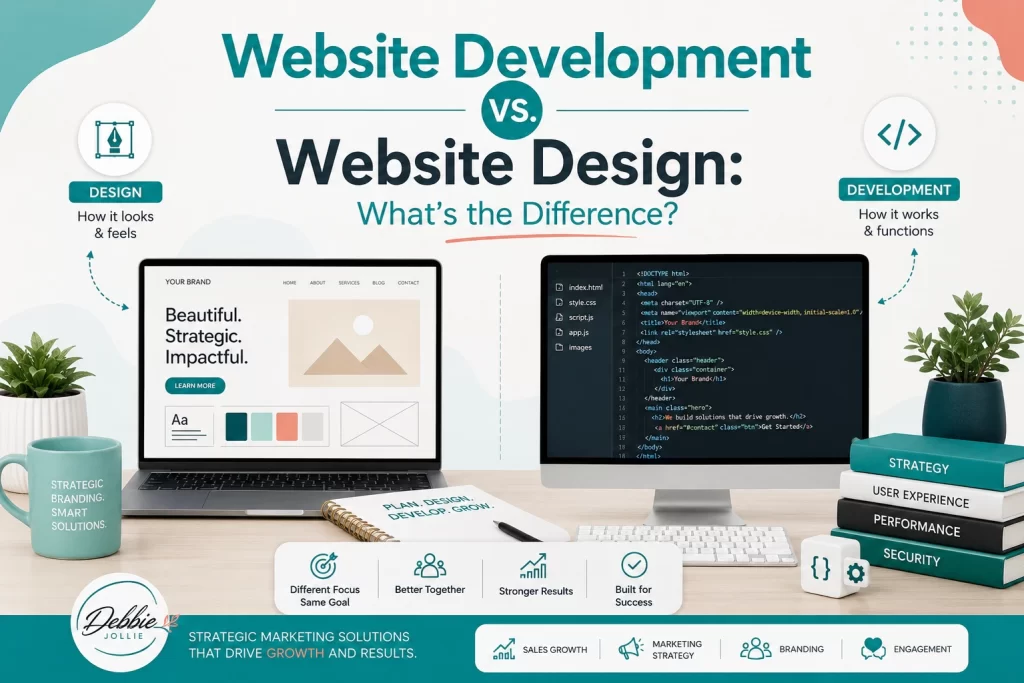
Website Development vs. Website Design: What’s the Difference?
When I built my first website at the beginning of 2018, I thought I had reached an important milestone in my business.
For years, I had relied on networking, referrals, LinkedIn, speaking engagements, and word of mouth to attract clients. Having a website felt like the natural next step. In fact, it came highly recommended from my business coach at the time. It gave me a place where people could learn more about me, explore my services, and contact me if they wanted to work together.
At the time, I didn’t think much beyond that.
I certainly wasn’t thinking about Search Engine Optimization (SEO), user experience, page speed or how artificial intelligence would eventually change the way people discover businesses online.
Fast forward to 2026, and my perspective has completely changed.
Since relocating to Asia, I’ve spent a significant amount of time thinking about how people discover me online. I may meet someone at a networking event in Vietnam, connect with someone on LinkedIn in Singapore, or receive an enquiry from a business in Brazil or South Africa. One thing almost everyone does before reaching out is search for me online.
That search often determines whether they contact me.
Your website is no longer just an online brochure. It’s your digital headquarters. It’s often your first impression, your sales representative, your portfolio, and your credibility, all rolled into one.
As I’ve been rebuilding my online presence, I’ve been investing heavily in SEO, GEO and improving the technical performance of my website. This has also reminded me how many people confuse website design with website development.
Although they work together, they are not the same thing.
Understanding the difference can help you make better decisions, invest your money wisely, and ultimately create a website that doesn’t just look beautiful, it actually helps your business grow.
Why Your Website Matters More Than Ever
We live in a world where people research before they buy.
Whether you’re a consultant, coach, accountant, lawyer, lecturer, photographer, or entrepreneur, people want to know who you are before they commit to working with you.
They’ll search your name. They’ll look at your LinkedIn profile.They’ll visit your website.
They’ll compare you with others in your industry. That means your website has to do much more than simply exist.
It needs to communicate credibility.
It needs to answer questions.
It needs to build trust.
It needs to encourage people to take action.
Most importantly, people actually need to be able to find it. That’s where both website design and website development become equally important.
What is Website Design?
Website design focuses on everything your visitors experience visually. Think of it as the personality of your website. Website design includes things like:
- Colours and branding
- Typography
- Photography
- Graphics and icons
- Page layouts
- Navigation
- Calls to action
- Mobile responsiveness
- User experience (UX)
A well-designed website feels easy to use. Visitors don’t have to think about where to click.They instinctively know where to find information. The pages are clean.The fonts are readable. The colours are consistent. The brand feels professional. Good design creates confidence. Poor design creates doubt.
Research has consistently shown that people form an opinion about a website within seconds of landing on it. If your website feels outdated, cluttered or difficult to navigate, many visitors won’t stay long enough to learn how good your services actually are. That’s why design matters.
What is Website Development?
Website development is everything happening behind the scenes that makes your website function properly. If website design is about appearance, website development is about performance. Website development includes:
- Building the website
- Writing and maintaining code
- Improving loading speed
- Mobile optimisation
- Website security
- Technical SEO
- Fixing broken links
- Connecting forms and databases
- Booking systems
- Payment gateways
- Schema markup
- Image optimisation
- Site maintenance
- Performance monitoring
Most people never see this work.
But they absolutely experience it.
If your website takes six seconds to load, visitors notice.
If your forms don’t work, they notice.
If your pages are broken, they notice.
If your website isn’t mobile-friendly, they notice.
Good website development creates a smooth, seamless experience that users almost take for granted.
Think of It Like Building a Home
One of my favourite ways to explain the difference is to compare it to building a home.
The website designer is like the architect and interior designer.
They decide how the home should look.
Where the rooms should go.
What colours work best.
How visitors move through the space.
The website developer is the builder, electrician and plumber.
They make sure the house actually stands.
The lights work.
The plumbing functions.
The doors open.
The roof doesn’t leak.
You need both. A beautiful house that falls apart isn’t useful. Neither is a structurally perfect house that nobody wants to live in. The same principle applies to websites.
Why I’m Focusing on Development First
Right now, I am speaking with my SEO specialist about redesigning my website. But I’m focusing on the foundation first. Over the past several months, I’ve been working with this specialist to strengthen my website.
We’ve been reviewing pages, cleaning up content, improving technical SEO, fixing issues, organising the site structure and helping search engines better understand what I do.
We’re also implementing GEO strategies so AI-powered search platforms can better interpret and recommend my content. It’s a lot of work.
For me, this work is incredibly important though, because I’m no longer building my business solely in Trinidad and Tobago.
My audience is becoming increasingly international.
I want someone searching for a personal branding consultant in Singapore, a LinkedIn trainer in Malaysia, a marketing strategist in the UAE or an executive communication coach anywhere in the world to have the opportunity to discover my work. That doesn’t happen by accident. It requires strong website development.
SEO, GEO and AEO: The New Digital Landscape
Traditional SEO remains incredibly important. Google still drives billions of searches every day.
However, search behaviour is changing rapidly.Increasingly, people are asking questions directly to AI platforms instead of typing keywords into search engines.
This is where GEO (Generative Engine Optimization) and AEO (Answer Engine Optimization) become essential.
Instead of simply ranking for keywords, businesses now need to create content that answers real questions clearly and authoritatively. AI tools are looking for websites that are:
- Accurate
- Helpful
- Well organised
- Trustworthy
- Easy to understand
- Technically sound
That’s exactly the direction I’m taking with my own website. Every improvement I’m making today is designed to help my content become easier for both humans and AI to understand.
But Design Still Matters
Once people find your website, what happens next? This is where website design takes over. Your design influences whether visitors:
- Stay or leave
- Read your articles
- Trust your expertise
- Book a consultation
- Register for a workshop
- Download your resources
- Contact your business
I’ve often said that visibility opens the door, but credibility gets people to walk through it. Your website design plays a major role in establishing that credibility. Professional photography. Consistent branding. Easy navigation. Clear messaging. Simple calls to action. These elements quietly influence how people perceive your business.
Common Mistakes I See
Working with business owners over the years, I’ve noticed several common mistakes. The first is focusing entirely on aesthetics. Some businesses spend thousands creating a beautiful website but never think about SEO. The result? A stunning website that almost nobody visits.
The second mistake is the opposite. Businesses become so focused on keywords so that they can get clients quickly….the website feels spammy and they forget about user experience or blending what they are doing into an overall strategy.
Visitors arrive but quickly leave because the website feels confusing or outdated. Another mistake is neglecting mobile users. Today, a large percentage of website traffic comes from smartphones.
If your website isn’t mobile-friendly, you’re likely losing opportunities every single day. Something I see with a lot of Caribbean websites. Finally, many businesses treat their website as a one-time project. A website should evolve as your business evolves.
Mine certainly has.
My Next Chapter
Although my website has served me well since 2018, it no longer fully reflects who I am today.
I’ve grown professionally. I’ve expanded internationally.My services have evolved.The technology has changed.Search has changed.The way people consume information has changed.That’s why this isn’t simply about refreshing colours or changing fonts.
It’s about creating a website that reflects where my business is heading over the next several years. By the end of 2026, my goal is to complete the technical improvements that strengthen performance, improve discoverability and create a better user experience.
Then, heading into 2027, I’ll focus on a complete visual redesign that better reflects my brand, my clients and the quality of work I deliver.I’m genuinely excited about that next phase.
Looking Ahead
If there’s one lesson I’ve learned over the past eight years, it’s this:
A website is never truly finished. It grows alongside your business. It should evolve as technology evolves. It should become smarter, faster, more useful and more aligned with the people you want to serve. Website design and website development aren’t competing priorities, they’re partners. One helps people find you. The other helps them trust you. One attracts visitors.The other converts them into clients.
As someone who helps businesses strengthen their brands, improve their digital presence and position themselves for growth, I see websites as one of the most valuable investments you can make.
Whether you’re launching your very first website or thinking about giving an existing one a new lease on life, don’t think about design and development as separate decisions.
Invest in both.
Build a website that is visually engaging, technically strong, search-friendly and genuinely useful to your audience. That’s exactly the journey I’m on right now, and I hope you’ll follow along as I continue transforming my own website into a stronger digital home for my business, my personal brand and the clients I serve across the Caribbean, Asia and around the world.
Frequently Asked Questions
What are website development services, and why are they important?
Website development services involve building and maintaining the technical functionality of a website, including coding, database integration, security, and performance optimization. These services ensure a business website is reliable, scalable, and capable of supporting business goals such as lead generation, online sales, and customer engagement.
How do website development services differ from web design services?
Website development services focus on the technical implementation and functionality of a website, while web design services concentrate on the visual appearance, branding, and user experience. Both disciplines work together to create a website that is both attractive and fully functional.
When should a business choose custom website development?
Custom website development is recommended when a business requires specialized functionality, third-party integrations, or a unique user experience that standard website templates cannot provide. It offers greater flexibility, improved scalability, and better long-term support for growing businesses.
What skills should you look for in a website developer?
A qualified website developer should have expertise in modern programming languages, responsive development, website security, performance optimization, and SEO best practices. Experience with content management systems, e-commerce platforms, and custom integrations is also valuable depending on business requirements.
Can website development services improve search engine optimization (SEO)?
Yes. Website development services contribute to SEO by improving page speed, mobile responsiveness, site architecture, security, structured data implementation, and technical performance. These factors help search engines crawl and index the website more efficiently while enhancing the user experience.
How do website design and development work together to improve user experience?
Website design creates intuitive layouts and engaging visuals, while website development ensures those designs function smoothly across devices and browsers. Together, they deliver a seamless user experience that encourages visitors to stay longer, interact with content, and complete desired actions.
What are the benefits of investing in professional business website design and development?
Professional business website design and development improve brand credibility, website performance, security, and conversion rates. A professionally built website is also easier to maintain, more scalable for future growth, and better equipped to support digital marketing initiatives.
How often should a business update its website?
Businesses should regularly update their website to maintain security, improve performance, and keep content relevant. While minor updates may occur monthly, a more comprehensive review of website design, functionality, and business objectives is recommended every two to three years or whenever significant changes occur.